Lock Down - No, the river kind…
Sometimes starting a journey is easy - jump in the car or on a plane and go. Sometimes, not so much. Three years ago we began, and life happened. Two years ago we thought we might be able to, but life was still going on. This time last year, we were trying to wrap up Amy’s mom’s estate, and get the boat ready to try again. But shoulder surgery and a few prior commitments happened, and we got a late start. We made an interesting discovery though, late November in the deep south is colder than we remembered. But then we don’t remember standing in the cockpit of a sailboat steering south, in weather with highs in the low 40s. We made it to central Mississippi before we decided to wait for warmer weather. But guess what! Warmer weather is here. And weirdly, we still want to go.
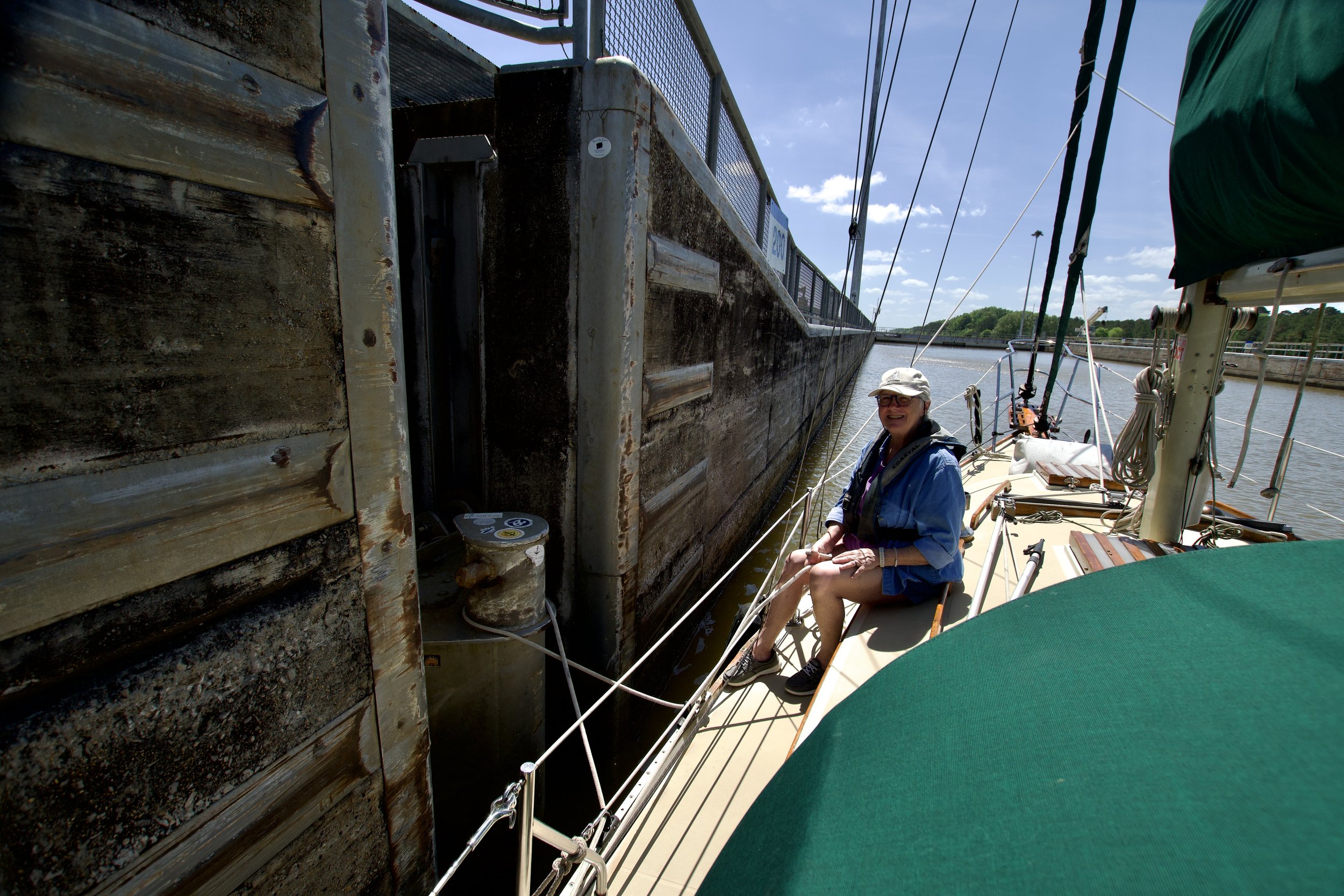
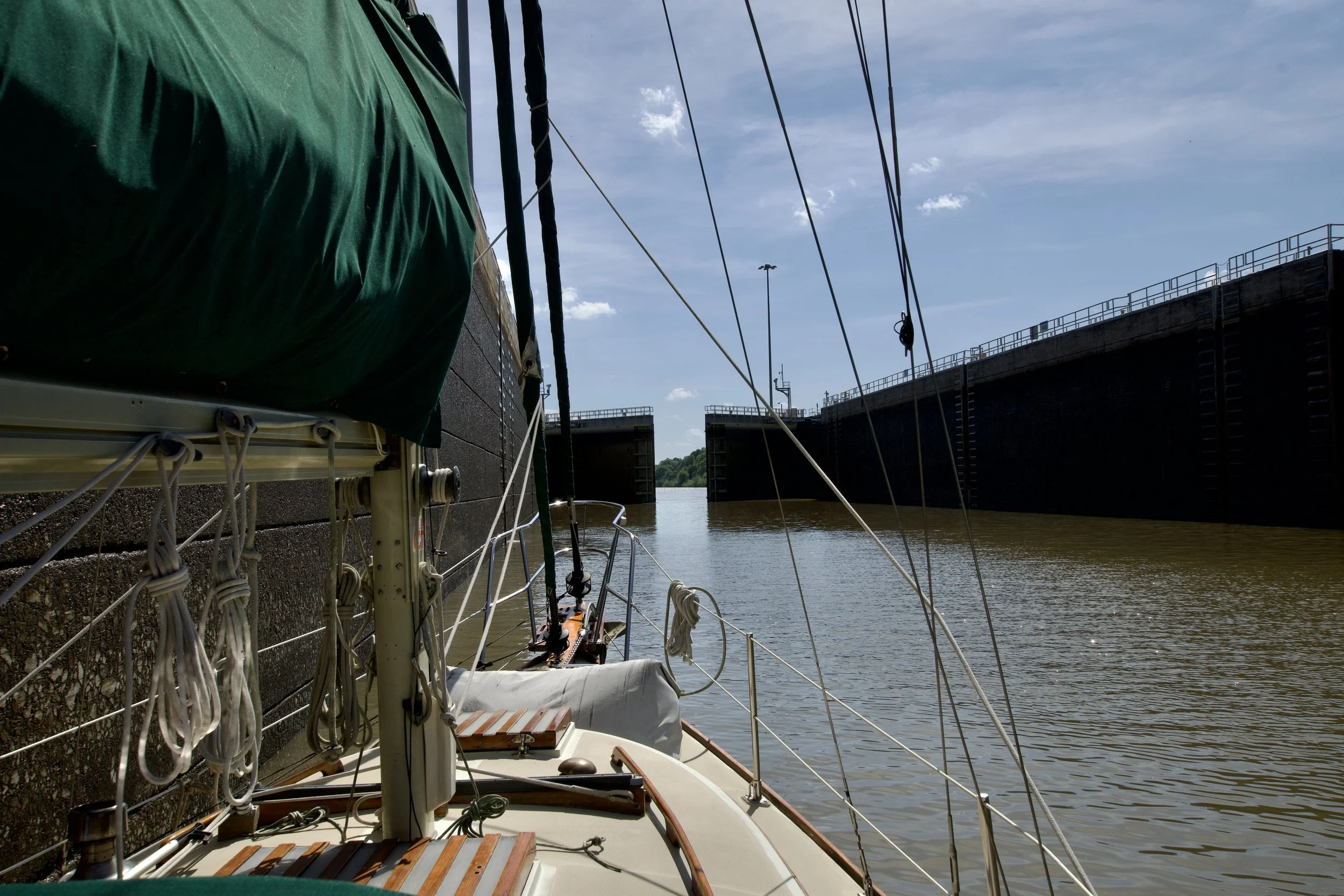
We left the nice people at Midway Marina in Fulton MS on 4/14, headed south. Our first anchorage was about 30 miles away and included three lock transits. If you haven’t locked thru on a river, the first time is a bit intimidating, but after that it’s actually fairly easy. It’s probably a bit like tying up to a floating dock in an area with big tidal swings. Except you’re not tying bow, stern and spring lines, you’re looping one line over a floating bollard and relying on your fenders to stabilize the boat against the lock wall. After a few transits, you find a rhythm that works for your boat. We found that rhythm early on this leg. We got lucky that there was limited commercial traffic, and the lock masters had the gates open and ready for us as we neared each lock. Each time we secured quickly and enjoyed the ride down to the next river level. A plus for us was that recreational boaters are not common this time of year, so we had the lock to ourselves. A sharp contrast from last November, when we locked through with as many as nine other boats; November is prime Looper travel time on the Tennessee-Tombigbee.
We arrived at our anchorage about 5:00, plenty of daylight to get settled. The anchorage was a bit narrow and that concerned me, but in retrospect, I worried more about that I needed to. Our Rocna Vulcan anchor and sufficient chain held us firm. We cooked some dinner, watched some comedy videos, worked some puzzles and called it a night. Nice to be back on the water again.
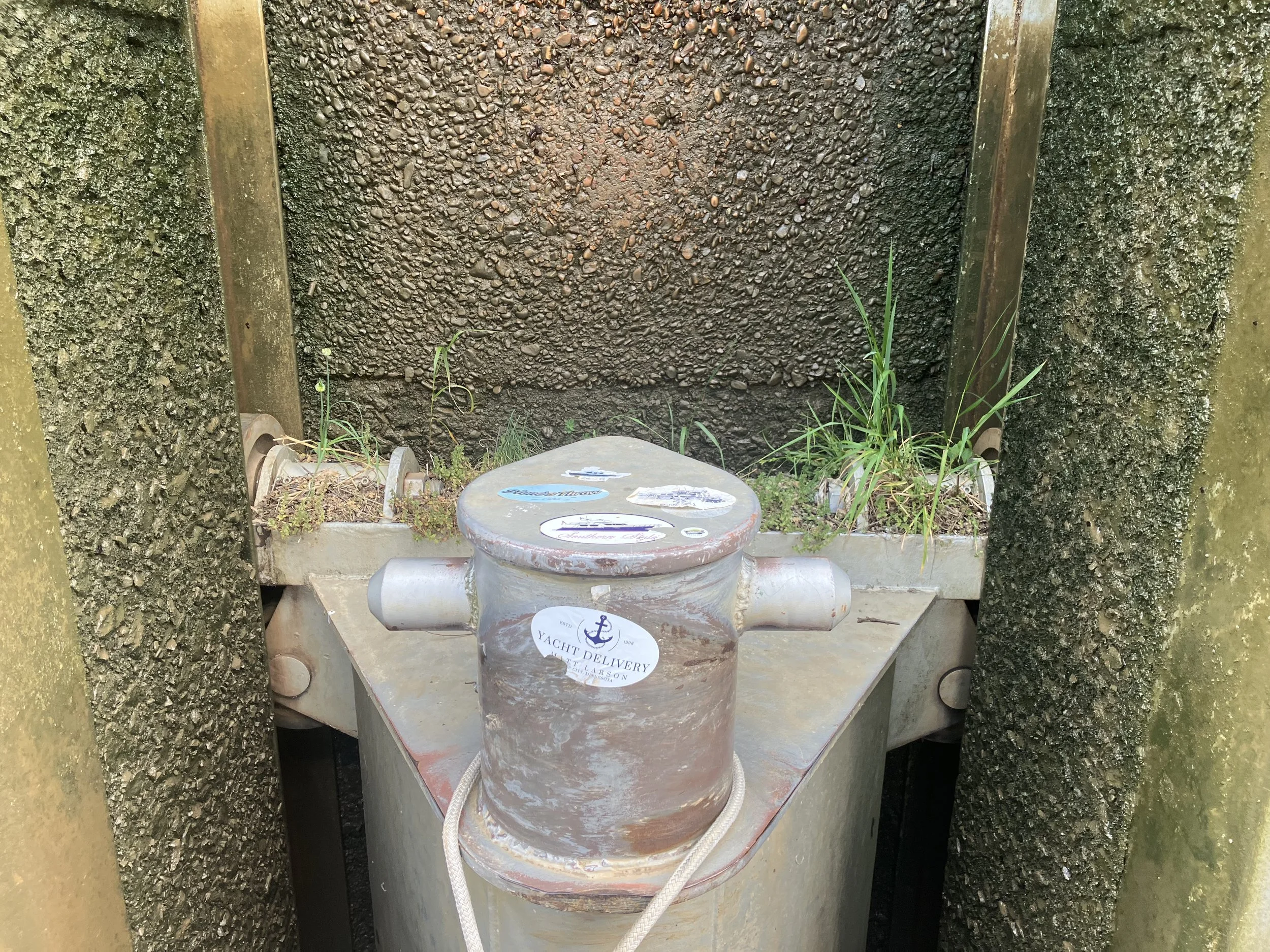
The next leg began about 8:00am. Another 30 mile stretch but only one lock today, and this one we had to wait a bit to transit. A barge was in the lock, locking down, as we arrived, and two recreational boats were coming upriver, so we dropped anchor just outside the channel and waited our turn. About an hour later the gates opened, the northbound boats exited and we made our way in. The locks along the Tenn-Tom are all basically the same design: a long straight concrete channel with floating bollards built into the walls, evenly spaced along the length of the interior wall. But each lock has a slightly different character to it depending on how well the individual bollards are maintained. In this particular lock, the bollard we tied to had accumulated enough dirt in its supporting frame, that some really nice plants were growing there. It looked surprisingly like a window box. Some might think they should clean that out; we thought it was a nice treat and a distraction from the stark concrete walls and steel gates.
Lockage complete, we made our way to Columbus Marina, the end of this leg. Columbus Marina is perhaps the most highly regarded marina on the Tenn-Tom, by the Great Loop Cruiser Community. And there is a reason for that. The staff are amazing, the marina is clean, quiet, and reasonably priced, and the city of Columbus is only 5 minutes away by courtesy car. We resupplied, got fuel, did laundry, and waited out some bad weather before heading out again the following Sunday.
Sunday was a bit cold and windy as the day began, but this time we were prepared. Over the winter we found some good foul weather gear on sale and it was worth it. We called the lock just before we pulled out and they said “Come on, the lock will be ready for you”. The entrance channel for the marina is almost exactly at the end of the long wall of the lock, so as we turned the corner we were already entering the lock. Chose our bollard, tied up and waited for the nearly thirty foot drop.
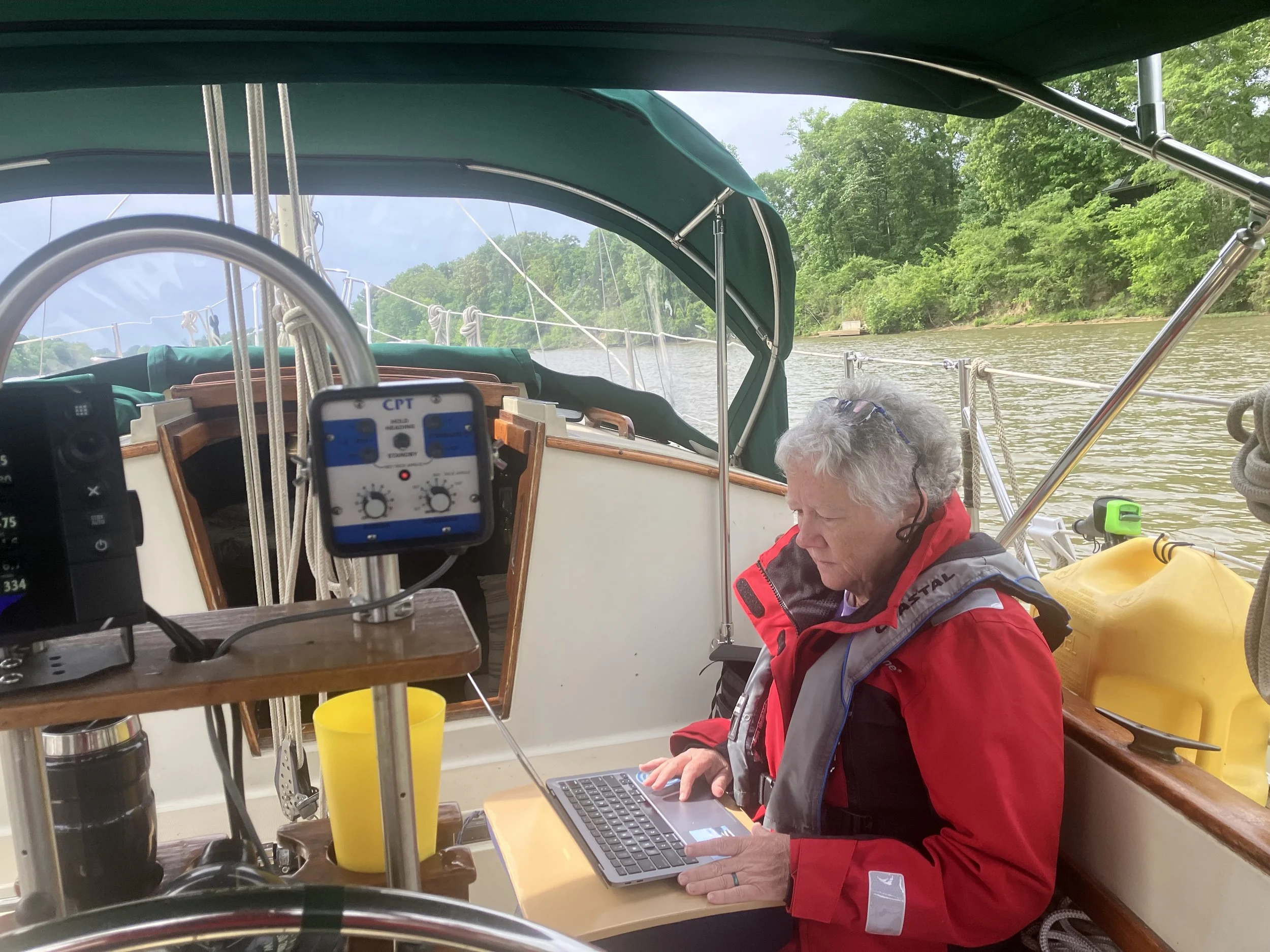
We fought headwinds the previous two legs, but today the 10-15mph winds were from the north; chilly, but a nice tailwind for a change. Sadly, the river channel, in this part, isn’t really wide enough to sail, so we couldn’t take full advantage of that wind, but we were grateful for the push. We were a little less grateful as we reached our anchorage for the night. It was a bit open to north winds, and Kotona likes to yaw at anchor in any significant wind. Once again, our Rocna held fast and the winds lessened as the evening approached. By bedtime the water was glassy, and we had a great night’s sleep.
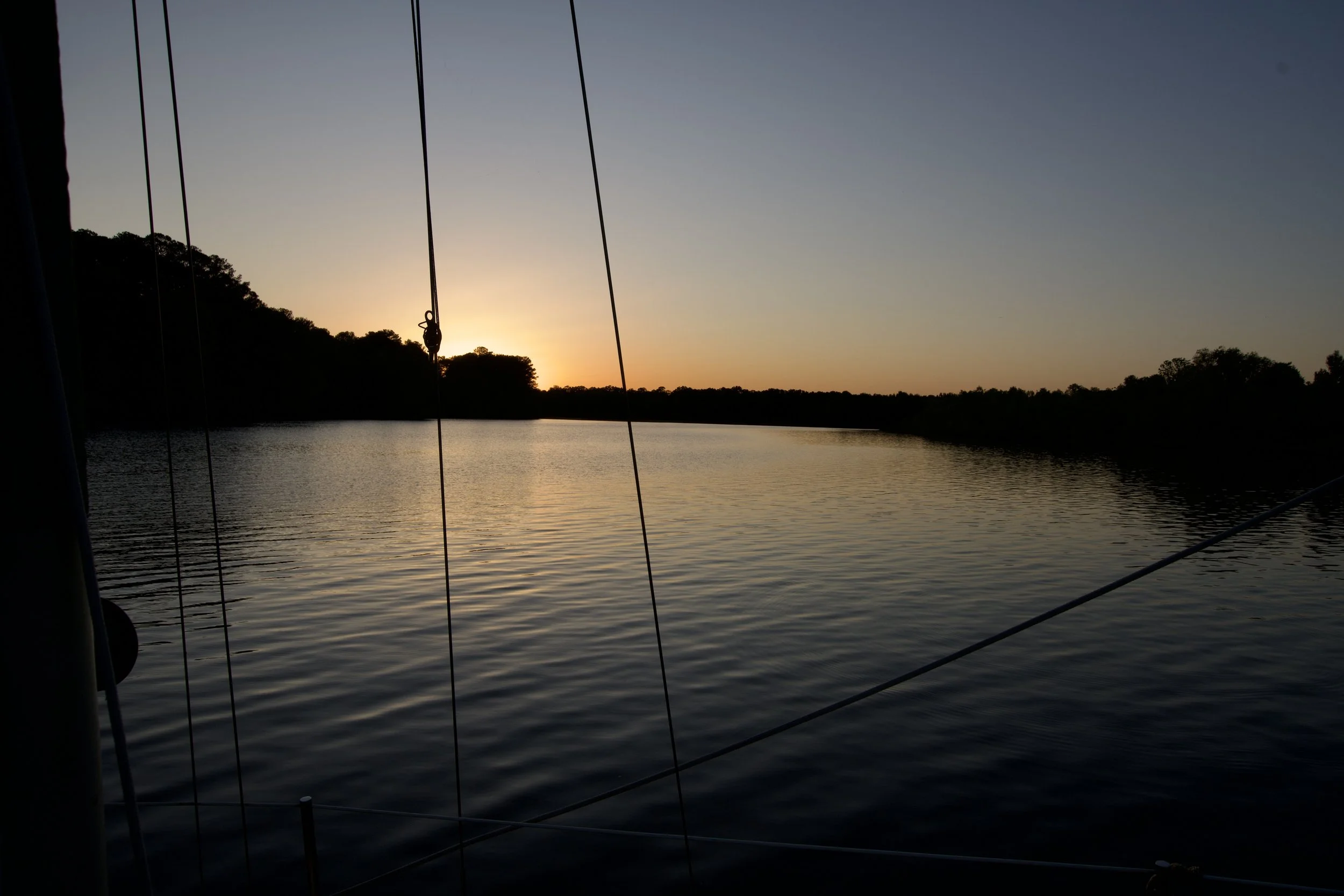
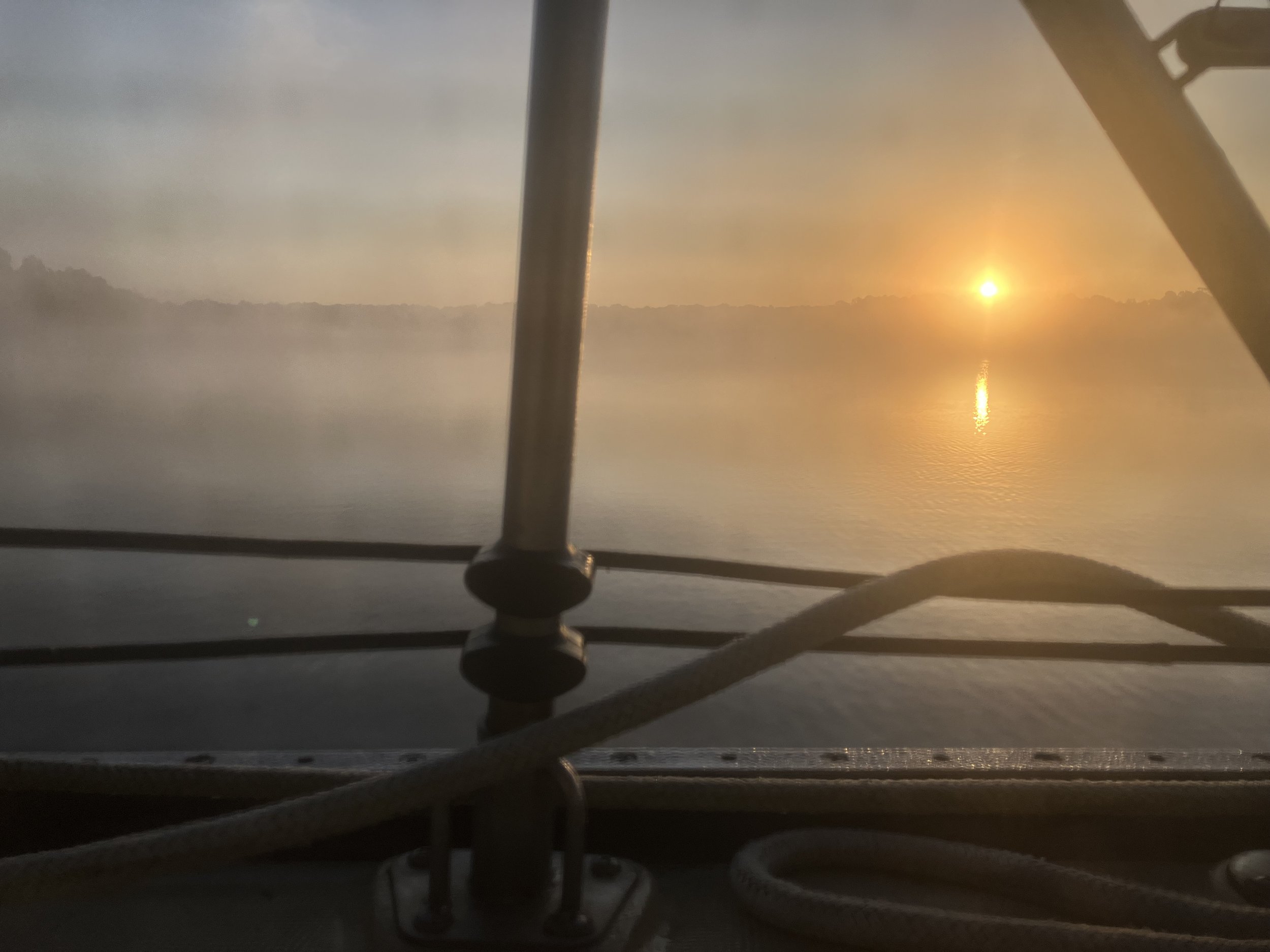
The next morning started out foggy, but it burned off quickly as the sun made its way up. We were underway by about 8:30 and through the next lock shortly thereafter. This leg would be about 30 miles, and our next anchorage is a favorite among those that frequently transit the Tenn-Tom.
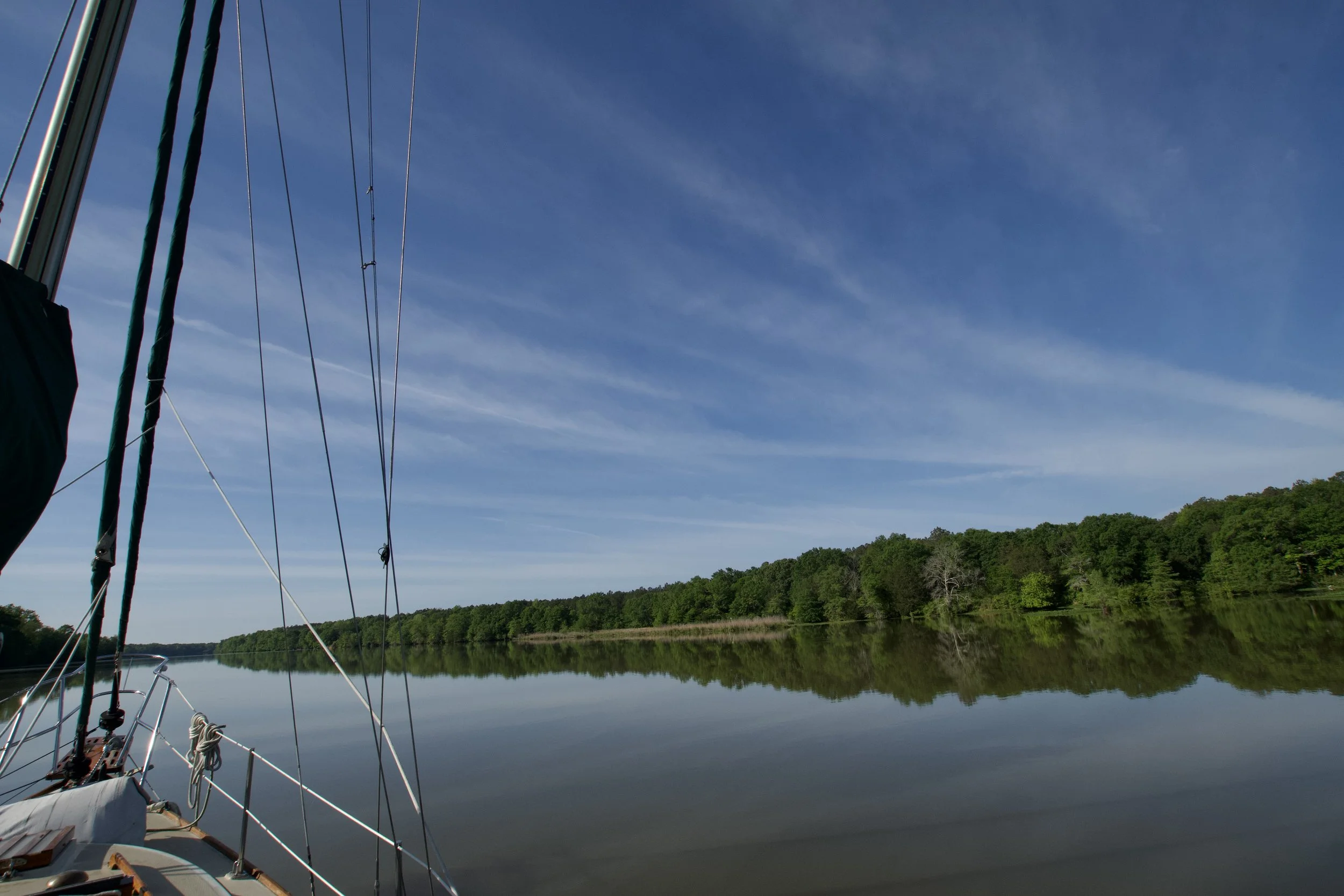
We’re out of the man-made portion of the waterway and back in the river system that was here long before people in boats of any kind ventured into these waters. The Tombigbee River has carved a winding path through the landscape, occasionally turning almost completely back on itself. Those tight curves can generate enough erosion to eat away at the thinner portion of land within the curve, until an island is created and the river’s main channel takes the new, shorter path. These oxbows can make excellent anchorages, and one of them was our destination.
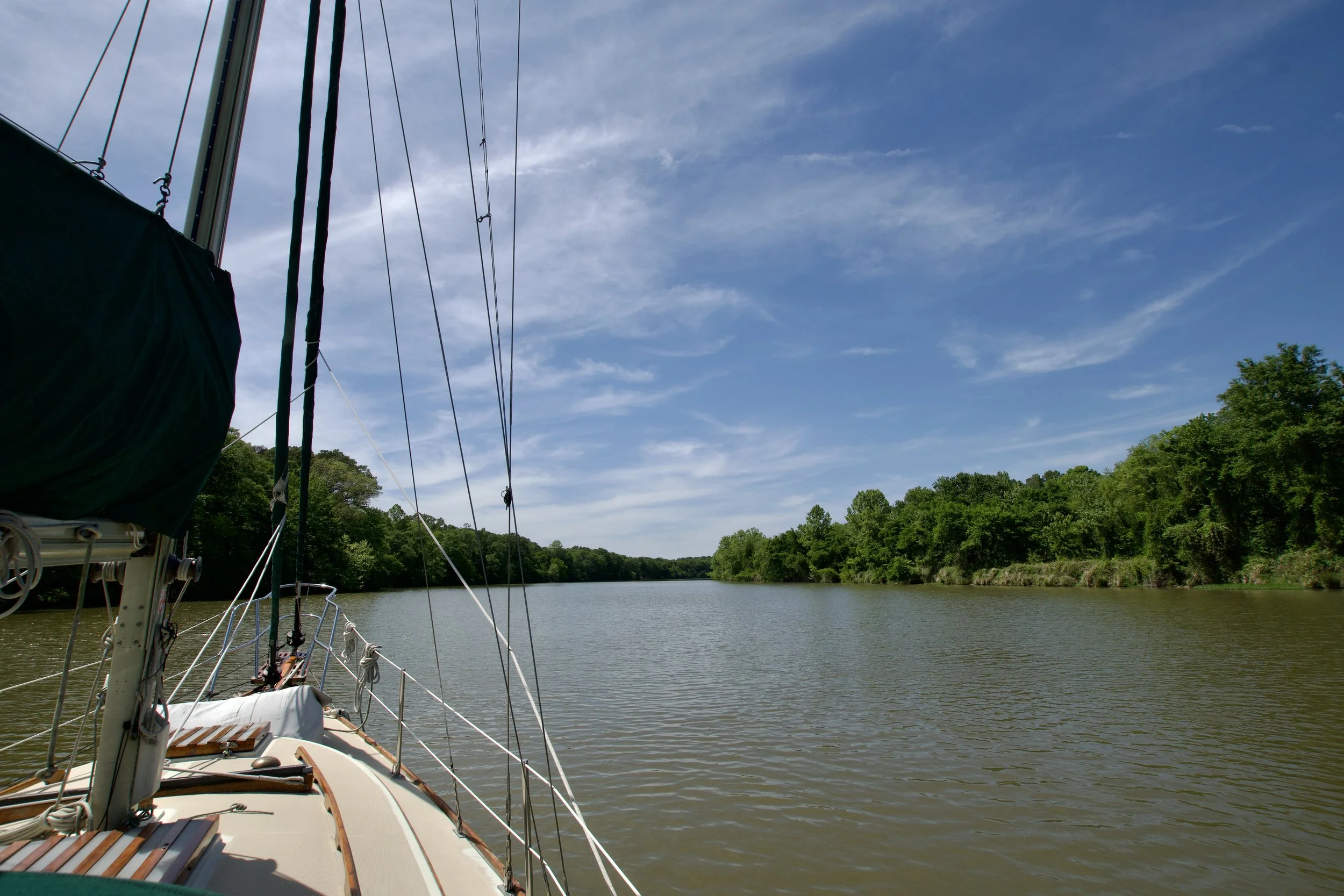
We arrived around 2:00 pm; a short day, but Amy had a Zoom meeting later, and we couldn’t be sure that we would get through the lock 8 miles downstream, and to our next anchorage in time, so we chose this spot. We did well. It was quiet, peaceful, just a bit of wind. We anchored in about 17’ of water and the anchor set firmly. The oxbow is wide enough and long enough for many boats, but we had it entirely to ourselves. We grilled hot dogs for dinner, Amy made her presentation, and we turned in early.
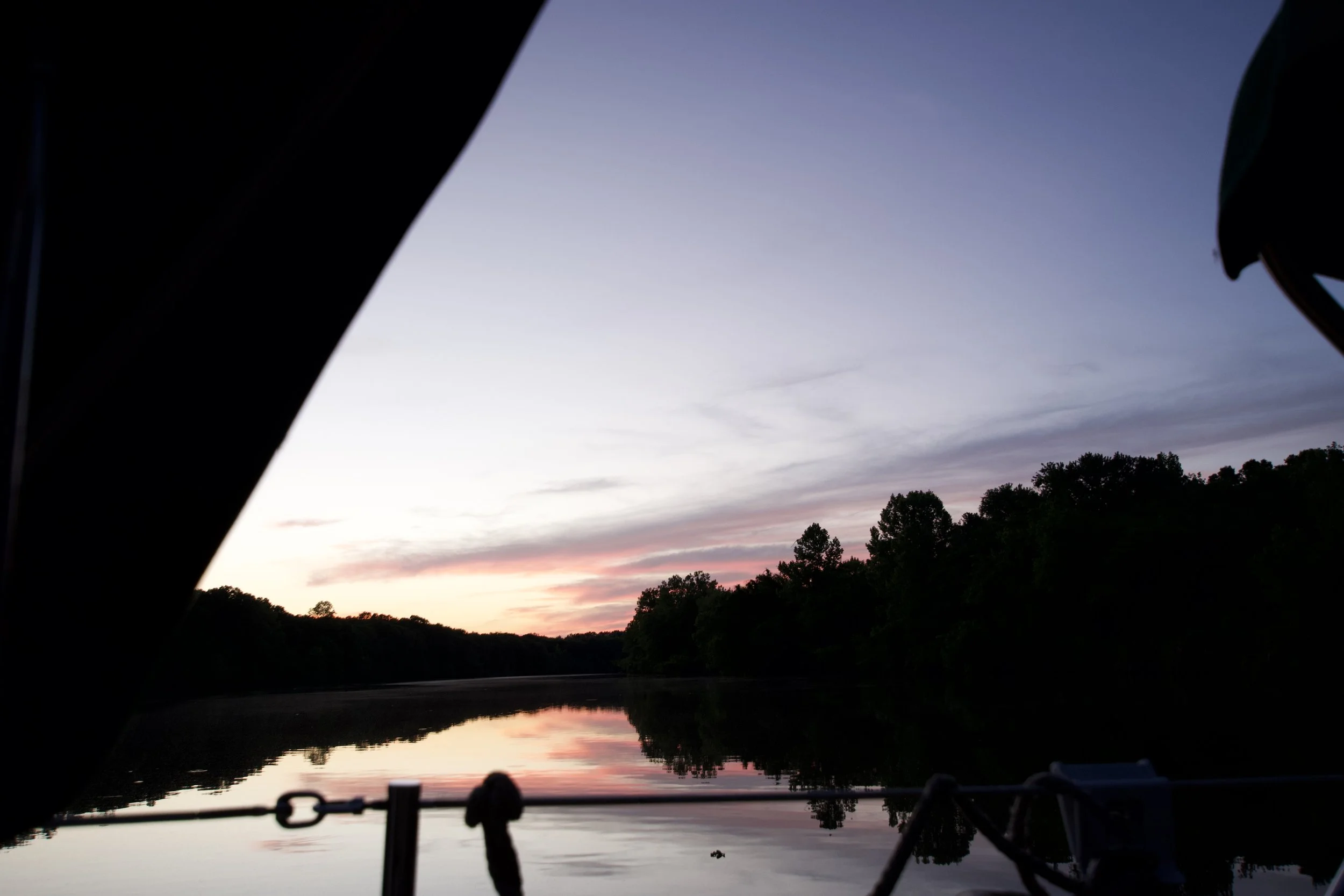
Overnight, the temperature dropped into the low 40s. So as you might expect, we awoke to fog. We waited for it to dissipate, enjoying hot coffee, hot tea, and bagels for breakfast. We headed out hoping that we could make the lock and have enough time to reach our intended anchorage about 40 miles south of the lock. As we rounded the point where the oxbow joins the main channel, the fog thickened. No traffic showed on AIS, so we gently made our way south, with Amy near the bow watching for any small boats or floating debris in the water. After a mile or so the fog burned off completely and we got up to cruising speed, settling in for the hour and a half trip to the lock.
Upon arrival we received some good news, bad news. A northbound tow was already in the lock which meant when he cleared the lock we could go right in. The ride down, however would take a while as the lock was having issues with the valves that let the water out. The transit was slower than usual and we realized that we didn’t have enough time to reach our next planned anchorage.
Fortunately, we had a plan B and it was just around the corner from the lower lock gates. Helflin Dam sits near the beginning of a series of fairly tight bends in the river. The lock channel was cut to form a straight path beyond those bends about 2 miles downstream, creating a manmade oxbow. Depending on the flow from the dam, that lower portion of the original river channel makes an excellent anchorage. We confirmed that the flow from the dam was normal, which meant a slight current, but nothing to be concerned about. We left the lock gates, turned to starboard and made our way just past a Corps of Engineers boat ramp. Picked our spot and anchored in 13’ of water. We set the anchor hard, just in case, but probably didn’t need to. The current was noticeable but not nearly enough to cause a problem. We settled in for the afternoon, did some reading, some route planning, ate dinner and turned in early. Tomorrow would be our longest day.
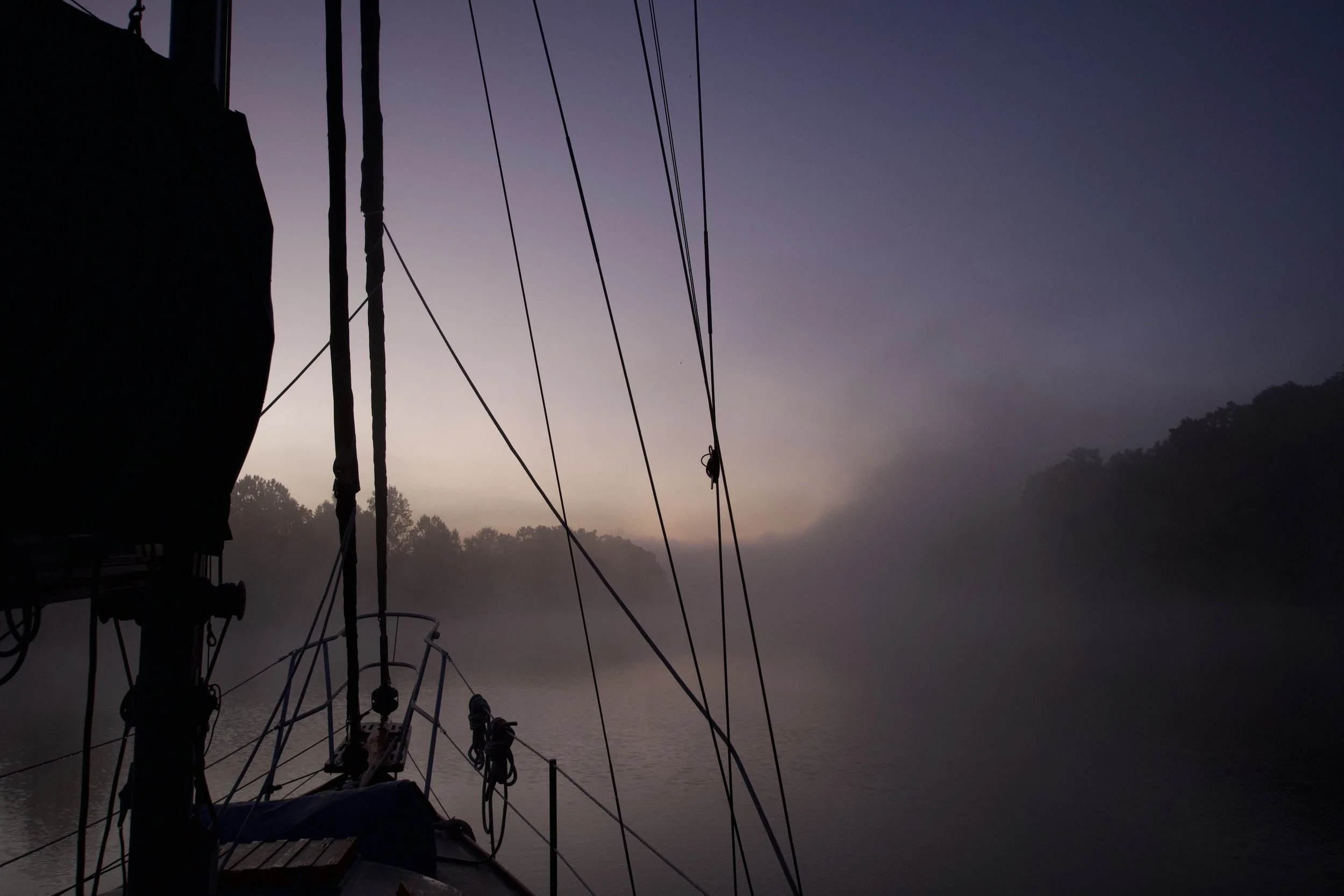
Once again, the day started in fog. Pretty thick in our little oxbow, but we needed to get underway. We were looking at our first almost 50 mile day today, and it would be best if we could be at our destination before 4:00pm. We raised the anchor, and were moving by 6:15am, though slowly and carefully. We checked AIS and saw no commercial traffic, so we headed out into the main channel. Fortunately, the fog began to clear quickly and in 30 or 45 minutes we had good visibility and could get up to cruising speed. Our destination was Demopolis, AL and the Kingfisher Bay Marina; the only other marina between Columbus and Mobile. It’s a long way, for us at 6mph, to do in a day, but there is only one good anchorage along the way and it’s only 6 miles upstream from the marina. So we were going to try to make it the entire way.
This, as it turned out, was the most scenic section so far. The river, over the millennia, has carved a deep enough channel from one bank to the other, that what little barge traffic we encountered had plenty of room to pass. There were millions of trees, dozens of egrets, the occasional turtle, and even one snake. Sorry, no photo of that. But here’s some photos of other things we saw:
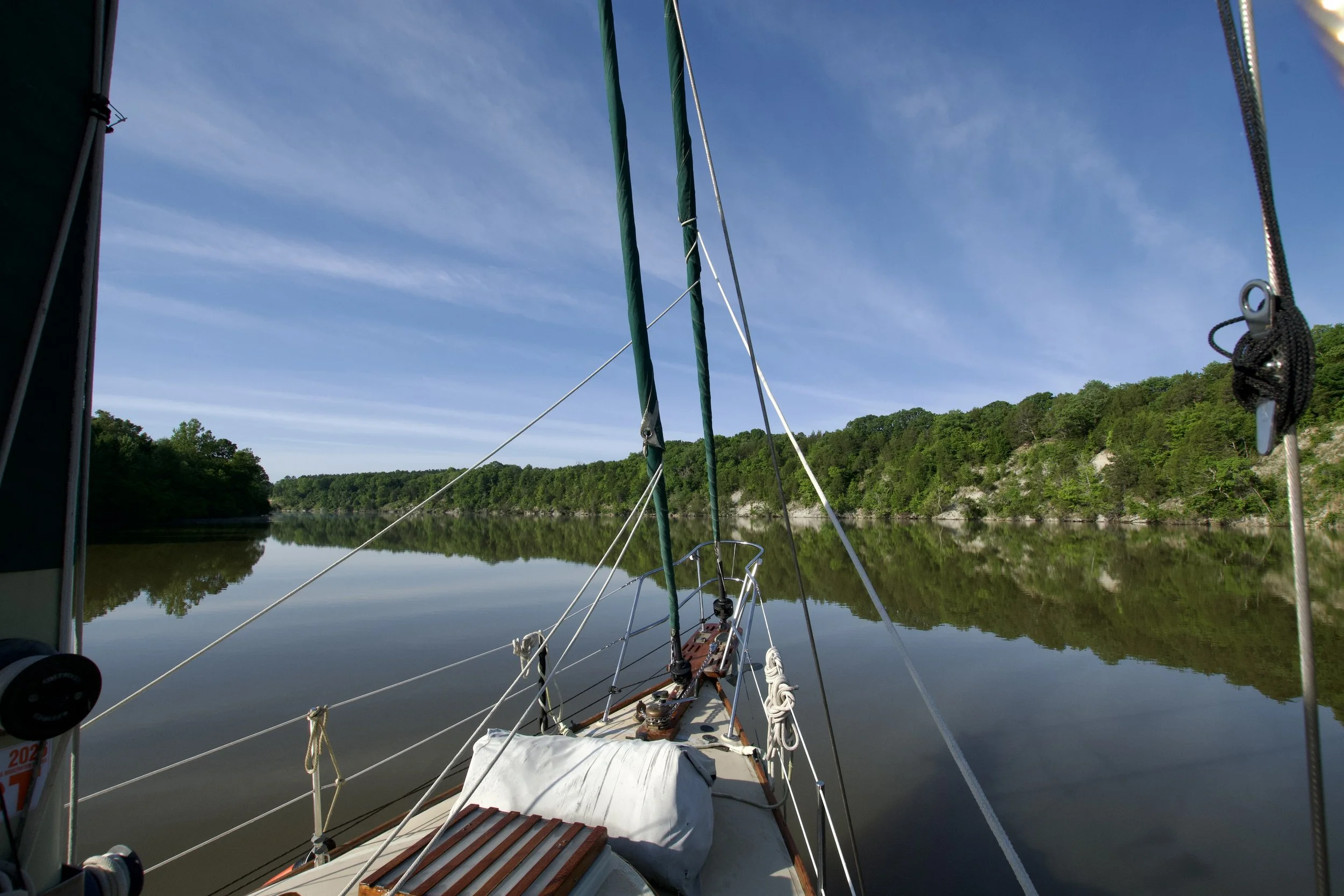
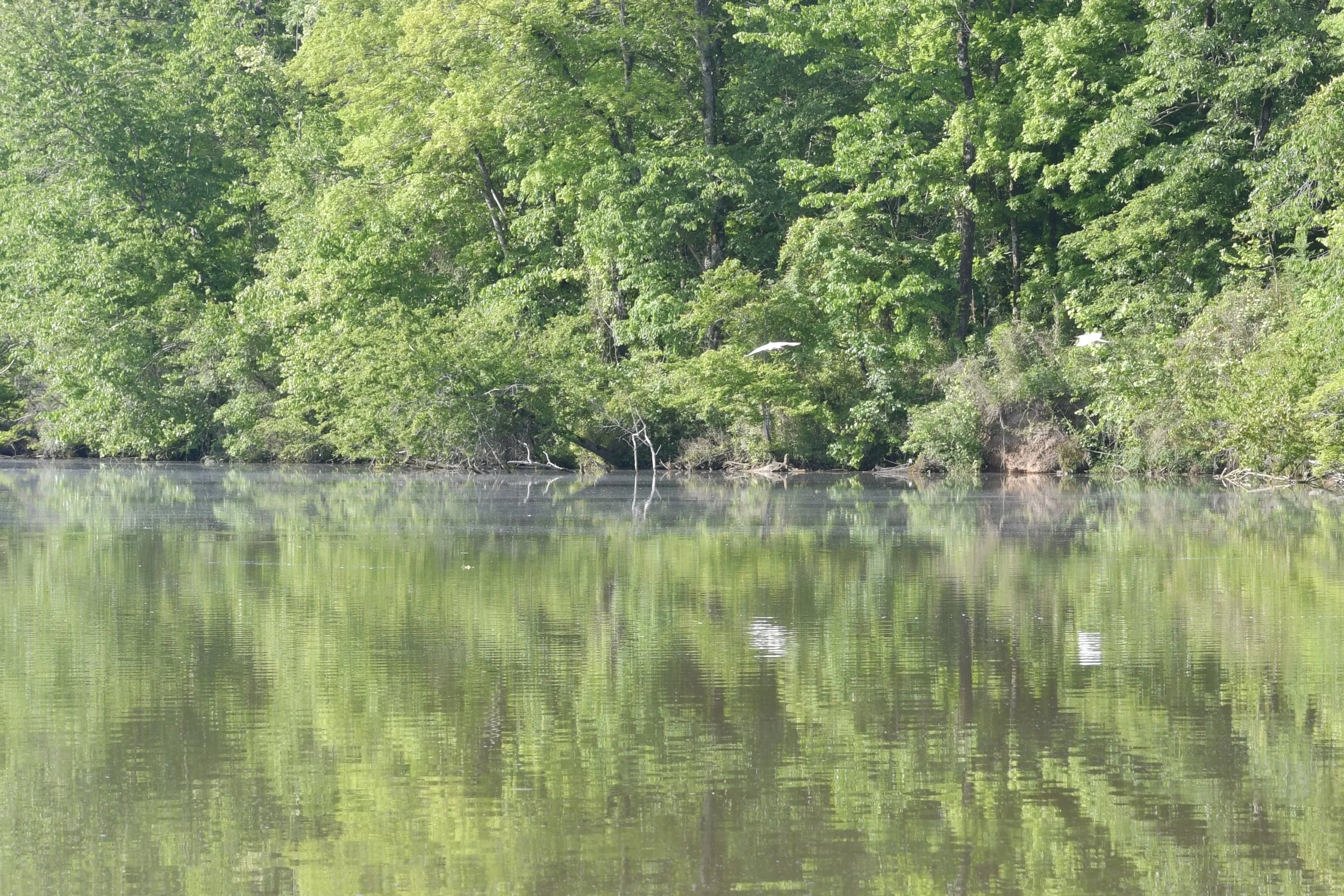
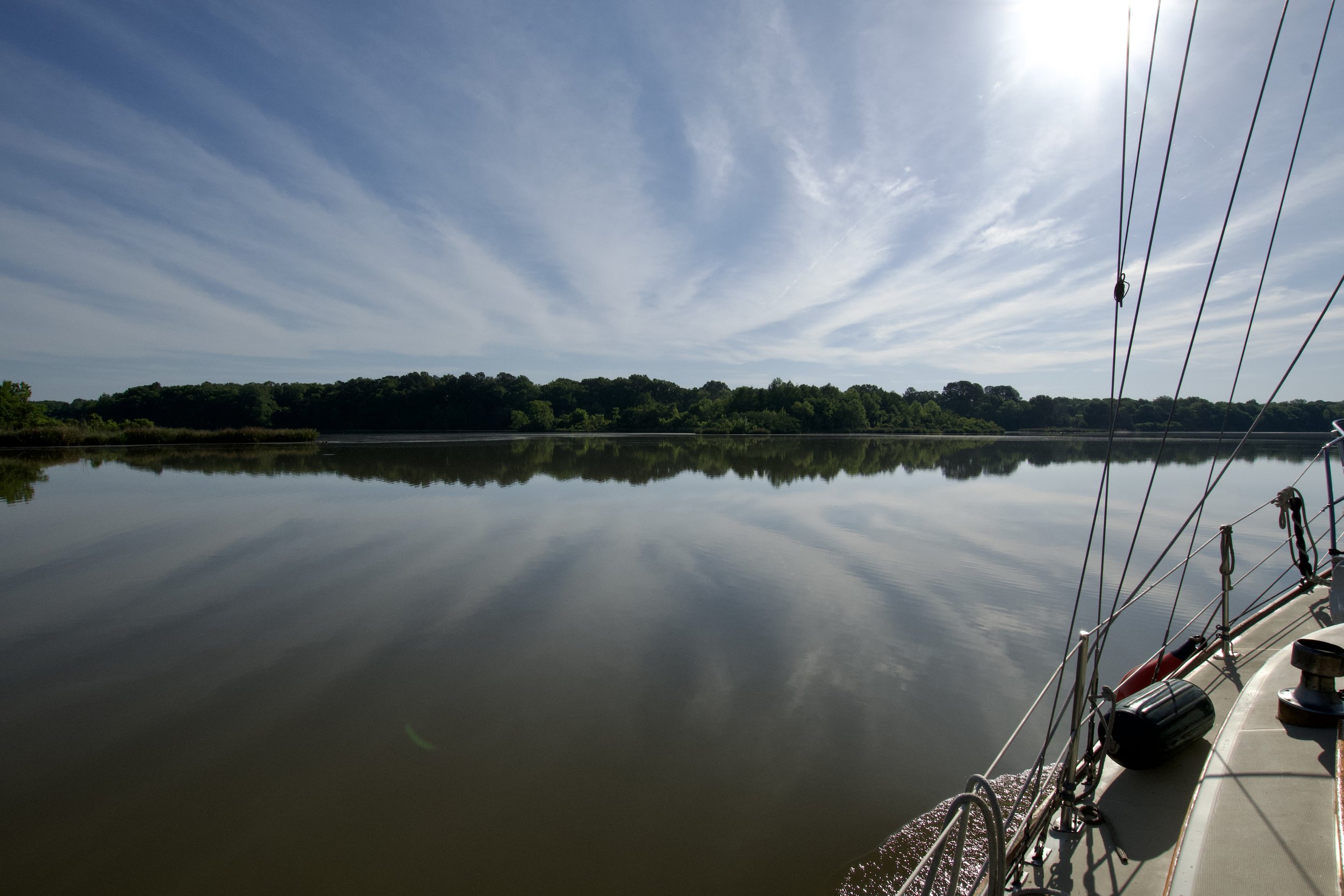
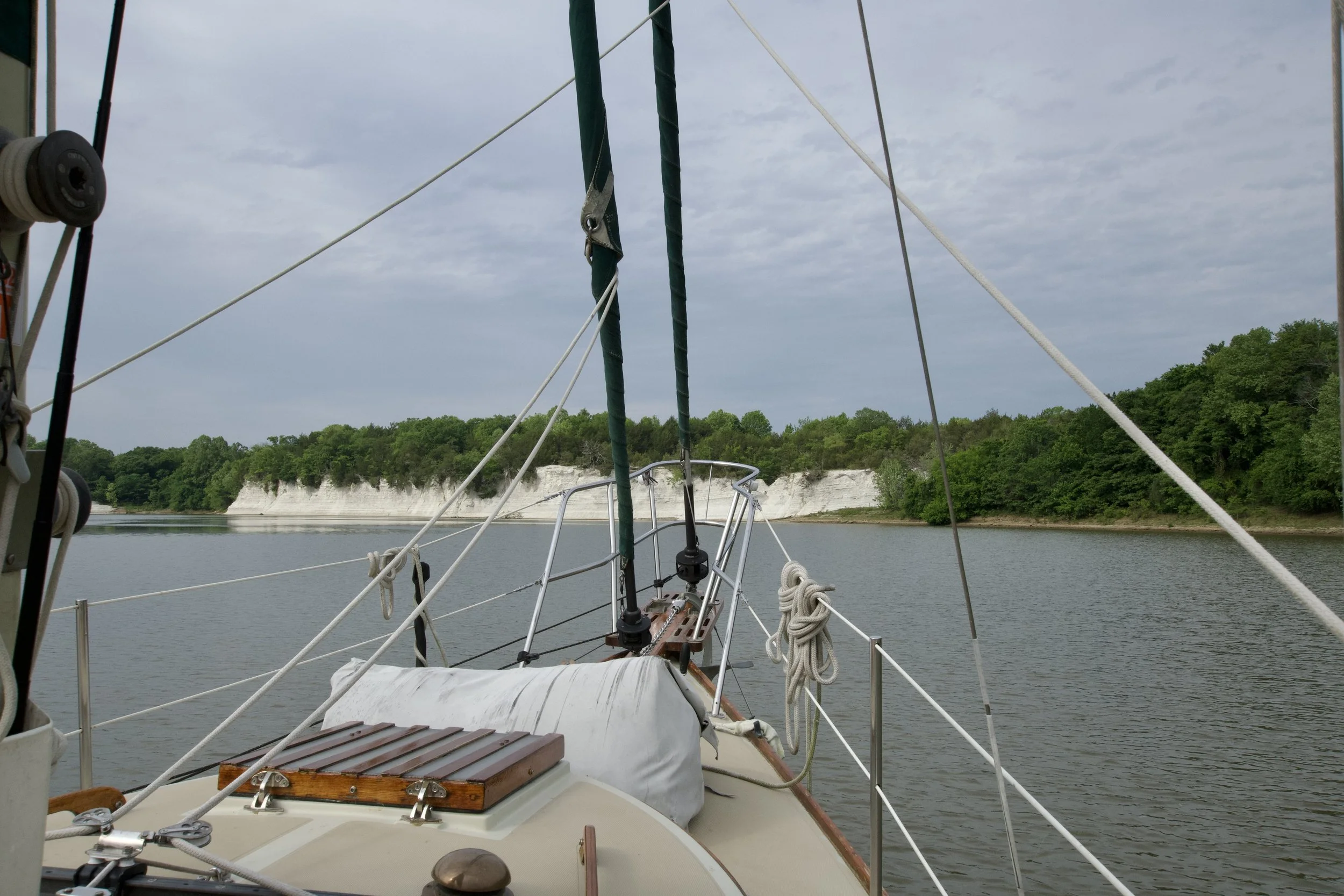
The White Cliffs of Epes. Formed around the same time and in the same way as the White Cliffs of Dover. Something you don’t expect in central Alabama. Surprise!
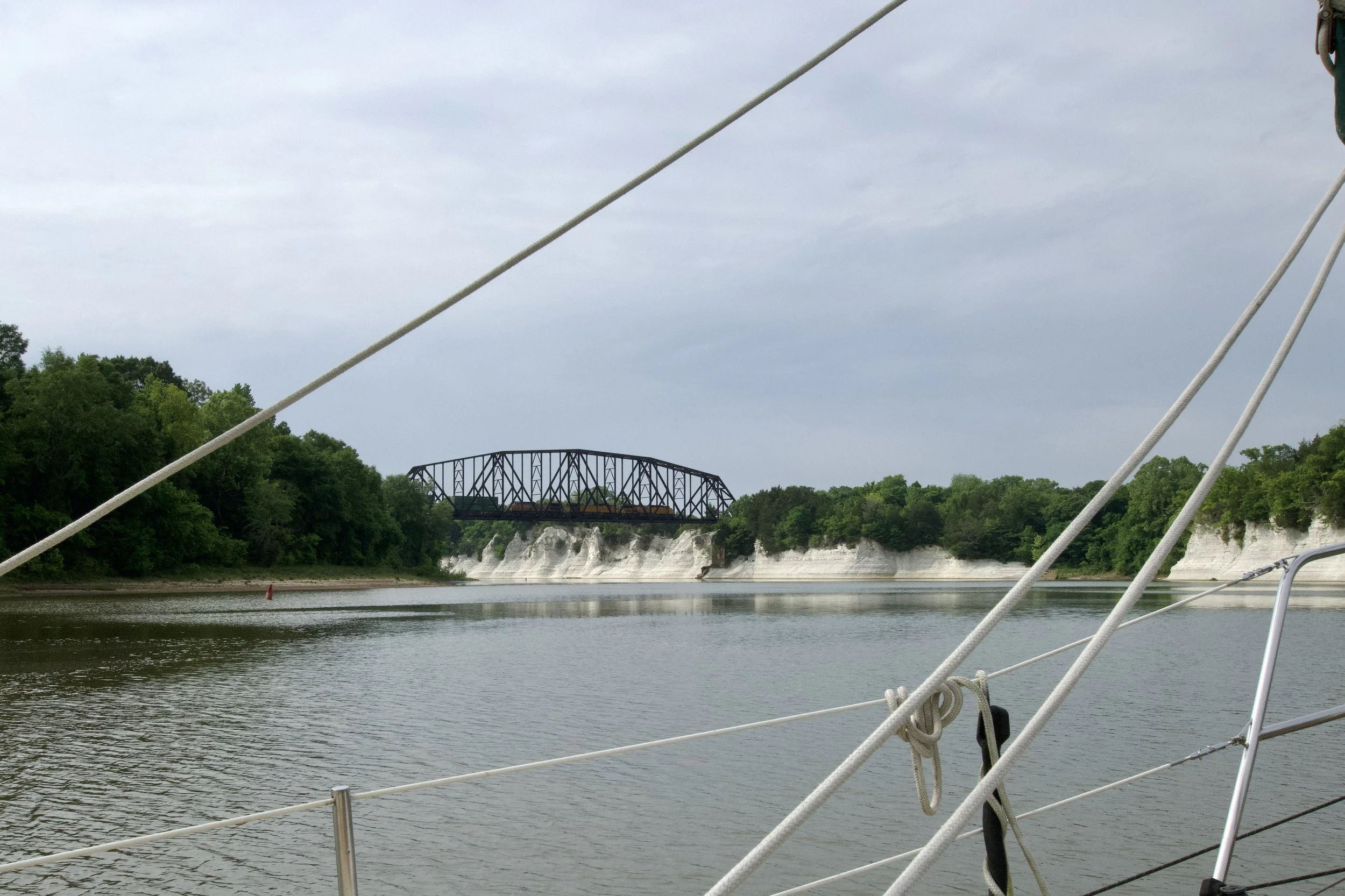
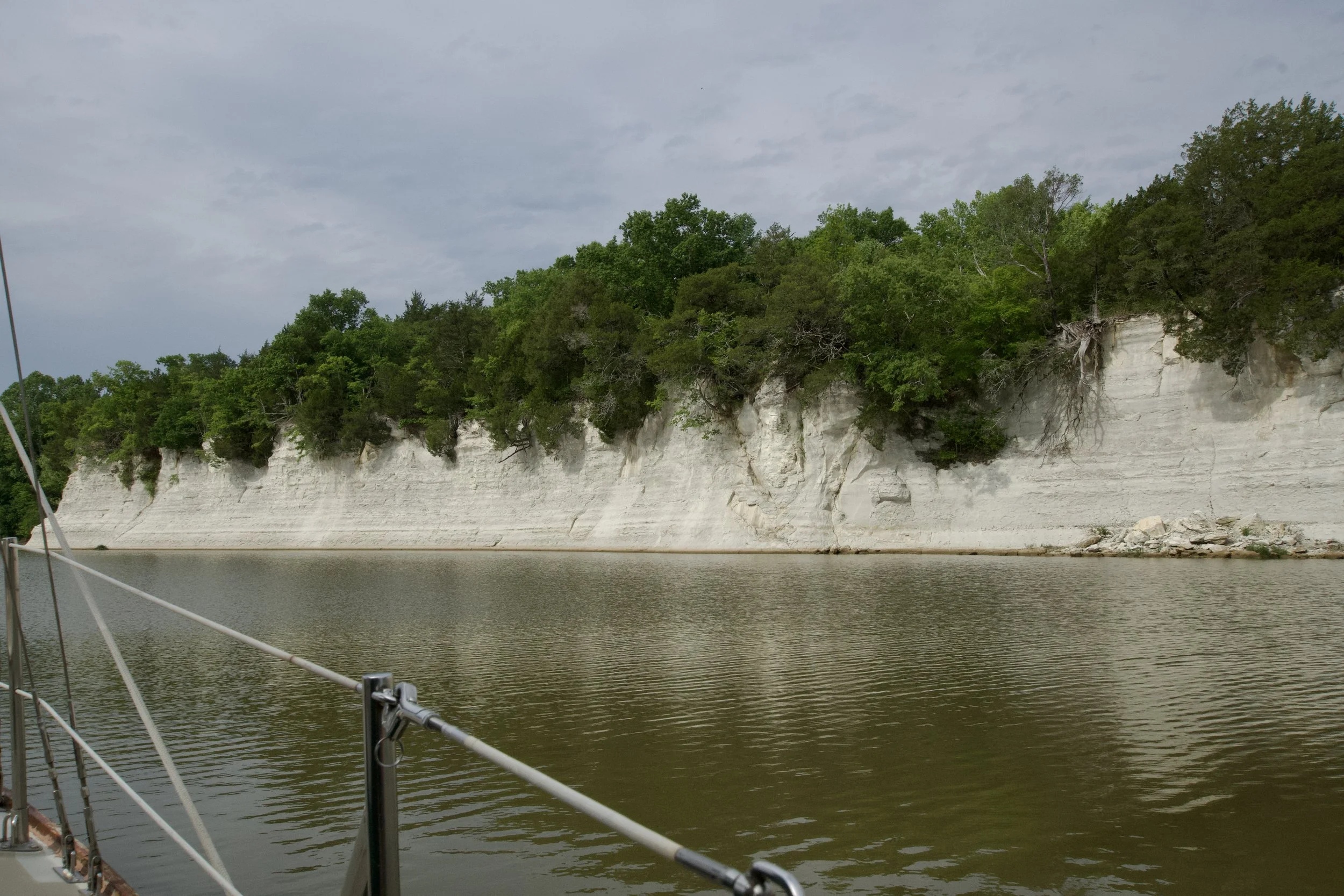
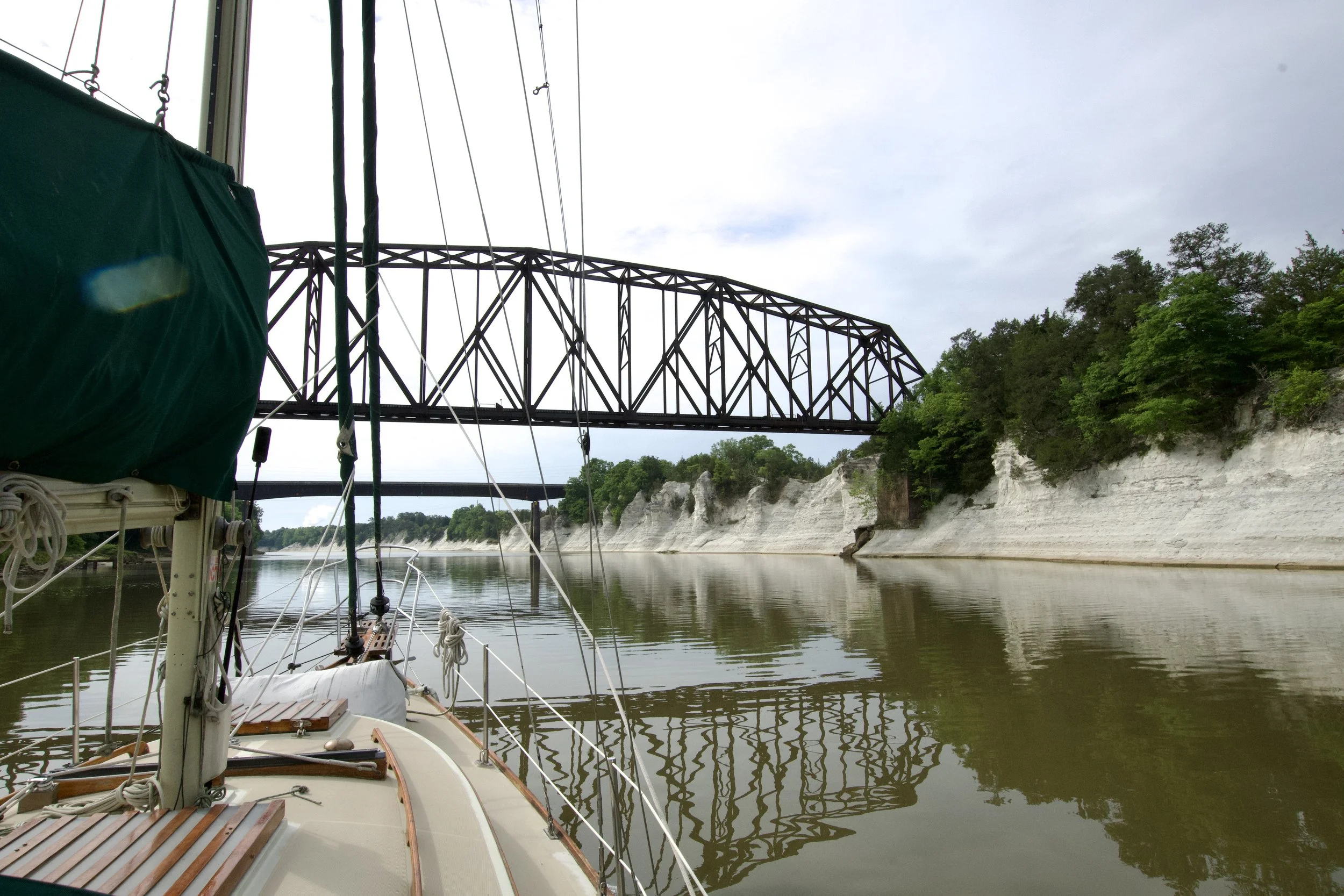
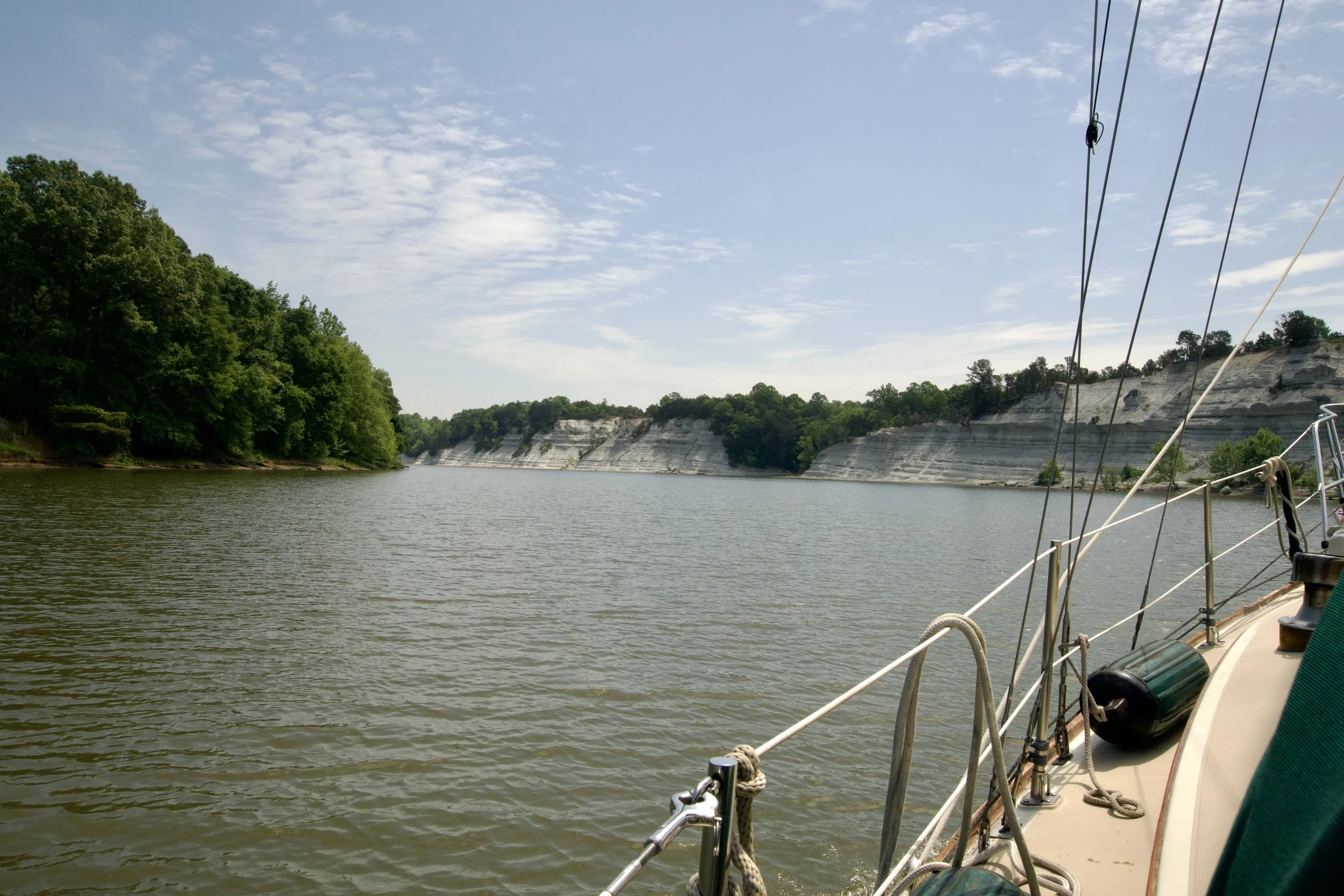
Further downriver the cliffs change to more sandstone or limestone type rock. Still impressive from the water.
After about nine hours underway, we reached our destination. We decided to stay in Demopolis a while and do a little engine work, electrical work, woodwork, and maybe one or two other things. We’d thought we would wait until we got to the coast for some projects, but Kingfisher Bay has a DIY yard and their rates are very reasonable. Cruising is said to be boat maintenance in exotic locations. Since we’ve never been here before, we’re going to call it exotic enough.